

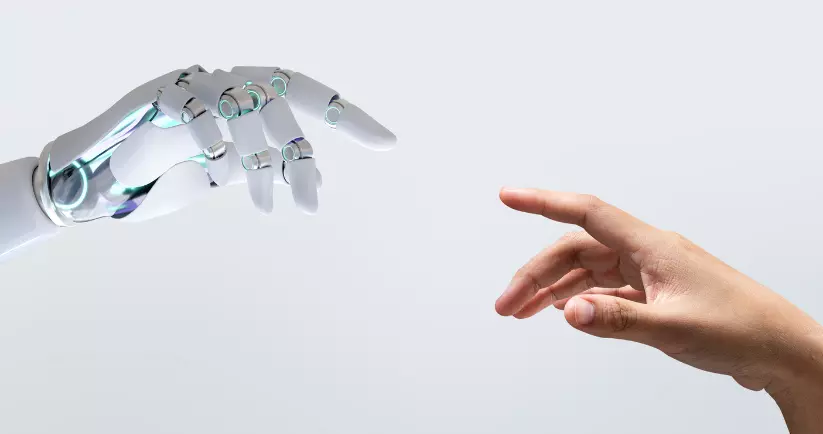
Artificial intelligence no longer is just a fantasy or buzzword, it is the day-to-day reality of our world now. A significant percentage of employees in most fields use some sort of AI assistance to improve the efficiency and quality of their work.
The same goes for using AI in HR, the tools like HR software, applicant tracking systems, payroll software, etc. improving the productivity of human resources over the years.
But before we discuss the aspects such as benefits, tools, applications and various challenges in implementing artificial intelligence in human resources let’s discuss what we mean by AI in human resources.
Artificial intelligence is the term we use to refer to technology that is capable of decision-making independent of human involvement where machines don’t need direct instructions.
When we say artificial intelligence or AI we are often referring to various closely related concepts and the combination of many such as machine learning, cognitive computing and predictive analysis working together in a system.
AI uses the training information given to the system to understand the patterns and correlations so it can make predictions in future.
AI in HR tech uses observations in the surroundings to be able to make decisions related to human resource management. That way you can also ensure the future of the company will always have the necessary skills to maintain productivity and make progress.
Artificial intelligence is used for multiple functions in human resources. Companies using AI in HR in India can improve their productivity significantly. Furthermore, adapting to technology such as machine learning in HR and predictive analytics early with AI can help firms to gain a competitive advantage in the market and take some major cost-effective steps.
Most companies use AI in HR tech for payroll processing with automation. As payroll is one of the crucial yet most complicated processes for businesses using artificial intelligence for the payroll will tremendously increase their efficiency.
It’s a time-consuming complicated process and doing it manually means errors, more effort and time. Furthermore, there is additional time that has to be invested in correcting those errors.
Using AI-powered software to automate the process enables auto-tracking and accurate data fetching from systems such as attendance management software.
It also validates the data according to pre-set criteria so your human resource department doesn’t need to go through it multiple times, saving you a lot of productive time and effort.
Statutory compliance is one of the most critical responsibilities of the HR department, as even a minor error can result in penalties, legal issues, or reputational damage. Managing compliance manually becomes increasingly difficult as labour laws, tax regulations, and statutory requirements continue to evolve. This is where AI can significantly simplify the process.
AI-powered HR systems can automatically monitor changes in labour laws and statutory regulations, helping HR teams stay updated without constant manual tracking. It can calculate statutory deductions such as Provident Fund (PF), Employees’ State Insurance (ESI), Professional Tax (PT), and Tax Deducted at Source (TDS) accurately while ensuring payroll complies with the latest government guidelines.
Additionally, AI can generate compliance reports, identify inconsistencies in employee records, and alert HR professionals about upcoming filing deadlines or missing documents. By reducing manual intervention and minimizing human errors, AI enables organizations to maintain accurate statutory compliance while saving considerable time and administrative effort.
Employee self-service (ESS) portals empower employees to access HR services independently without relying on the HR team for routine tasks. Artificial intelligence takes this experience a step further by making self-service faster, smarter, and more personalized.
AI-powered virtual assistants and HR chatbots can instantly answer employee queries related to leave balances, attendance records, payroll, tax declarations, company policies, and employee benefits at any time of the day. This eliminates long waiting periods and reduces the workload on HR professionals.
Furthermore, AI can guide employees through common HR processes such as applying for leave, downloading payslips, updating personal information, submitting reimbursement claims, or accessing policy documents. It can also provide personalized recommendations, send reminders for pending tasks, and proactively notify employees about important deadlines or compliance requirements.
By automating routine employee interactions, AI enhances the overall employee experience while allowing HR professionals to focus on strategic initiatives instead of handling repetitive administrative requests.
Unsurprisingly, human resources management is always eager to implement AI in recruitment. AI can help to streamline the complicated process for better results. The process starts with the job post and goes on till onboarding the employee. The workforce is crucial for organizations to be productive and grow in business.
AI can be used for resume screening so that HR professionals do not have to manually go through every application to shortlist eligible candidates. HR departments can go further to use AI in interview scheduling. It can keep candidates updated.
Performance management is a crucial process in any organization. It has to be done at regular intervals and it also needs to be unbiased to make it effective. Unfortunately, most organizations do reviews once or twice a year which do not portray complete pictures.
Since humans are prone to the ‘Halo Effect’ or ‘Recency Bias’ the reviews are often heavily influenced based on recent events or the first impression about the person.
Furthermore, most firms carry out performance reviews as a formality and employees respond with the same attitude which makes the entire exercise futile.
Using artificial intelligence in human resources for performance management can be revolutionary to provide a fair appraisal to employees. Machine learning in AI tools can track employee performance throughout the year to provide unbiased and on-demand reviews.
AI can help HR to identify the employees who are likely to leave the company as well as employees with great potential which can be valuable information for human resources for succession planning in the organization.
Employee engagement has a significant impact on the productivity of a company. The better the engagement, the more the work output, that’s why firms are now looking forward to using AI for employee engagement.
Most organizations rely on surveys to understand the level of engagement. These surveys are often boring and fail to check the real situation due to limited options. In addition to that, there’s too much time wasted between releasing surveys and collecting data, often making it too late till you finally figure out the analytics.
While AI can be very advanced when it comes to identifying the level of engagement a person has at work, HRs can use natural language processing in the form of HR chatbot to gauge employee motivation.
AI in HR is great news when it comes to analytics. Artificial intelligence can automate tracking data from various platforms, and sort and store it in a central depository.
In addition to that, AI can analyse vast amounts of data to provide real-time insights that are difficult to analyse for human eyes. That saves a lot of productive time for the human resource department.
The AI systems can also use their productive analysis to detect the possibility of employees leaving the firm and also the future leaders in the company. This way artificial intelligence can play a significant role in the decision-making for organizational strategies.
The onboarding process is essential for the employee experience as this is one of the initial and prime impressions that the employee carries for a long time. You can use AI to share various regulations with the employee, detailed job descriptions, and training schedules.
In addition to that, artificial intelligence can be used to share relevant candidate information with teammates as well as the team’s information with the new member.
That way AI in HR streamlines the onboarding for the employee as well as eliminates significant paperwork by allowing the employee to upload the documents.
Talent acquisition is one of the most difficult tasks for the HR department. AI can gauge future employee needs for the organization and shortlist the pool of potential candidates that the company receives for future use.
Artificial intelligence can also be used to conduct primary screening by asking questions and gathering information about their skills, education as well as experience. In addition to that AI can be used to stay connected to potential talent for the company.
How the human resource adopt AI and use it in the HR practices, so that it enhances employee engagement and inbuild retention, on the other hand, the productivity increased.
Here are the 5-step detailed roadmap that HR can follow before adopting AI in HR.
Clean, centralised data is the first requirement for AI in HR. AI learns from the records you feed it. Messy attendance logs and scattered spreadsheets produces unreliable output.
The following process’
Choose one connected platform over separate point tools. A chatbot on one process and a screening tool on another creates data silos. AI works best when payroll, attendance, and employee data sit in one system. A connected platform lets AI read across functions:
Point tools save money today. They cost you accuracy later.
Start with one high-volume, repetitive process. Payroll and resume screening are the strongest first pilots for Indian HR teams. Both are rule-based, time-consuming, and simple to measure.
Organization run a focused pilot:
Verify DPDP compliance and security certifications before you sign. Employee records are sensitive personal data under India’s Digital Personal Data Protection Act 2023. A vendor breach becomes your liability.
Ask every vendor:
Train the HR team before you scale. Organization should build readiness in stages:
Artificial intelligence has significantly transformed the way HR departments function by making processes faster, more accurate, and data-driven. From recruitment and onboarding to payroll, or from performance management to employee engagement, AI confirm whether HR professionals smoothly automate routine tasks and focus on strategic initiatives. As organizations continue to adopt AI-powered HR solutions, they are witnessing measurable improvements in workforce management and overall business performance.
AI helps HR professionals to make informed decisions by analysing large volumes of employee data in real time. Instead of relying on assumptions or manual records, HR can use AI-generated insights for recruitment, promotions, workforce planning, and succession planning. It results in accurate and objective decision-making.
AI improves the overall employee experience by providing quick and personalized HR support. AI-powered chatbots answer employee queries instantly, while provides personalized recommendations for training, learning, and career development. The Ai experience helps employees grow within the organization that overall leads to higher employee satisfaction and engagement.
By automating repetitive administrative tasks such as attendance tracking, leave management, payroll processing, document verification, and interview scheduling, AI reduces the workload of HR professionals. This allows the HR team to spend more time on strategic activities such as talent development and employee retention.
Manual HR processes are prone to errors, especially in payroll calculations, compliance management, and employee record maintenance. AI minimizes these errors by automating calculations and validating data, ensuring greater accuracy across HR operations.
AI provides valuable workforce insights that help organizations plan for future hiring, identify skill gaps, predict employee turnover, and develop leadership pipelines. With data-backed HR strategies, organizations can build a productive workforce that supports long-term business growth.
Artificial intelligence has undoubtedly transformed HR by improving efficiency, automating repetitive tasks, and enabling data-driven decision-making. However, it also comes with certain challenges that organizations must address before implementing it.
One of the biggest concerns is data security and privacy, as AI systems process sensitive employee information such as payroll details, financial records, and personal data. Organizations must ensure robust cybersecurity measures and restricted data access, with data protection regulations to safeguard confidential information.
Another major challenge is the skill gap, as many HR professionals may lack the technical expertise required to effectively use AI-powered tools. Without adequate training and upskilling, organizations may struggle to unlock the full potential of AI in HR.
Additionally, AI systems often inherit biases from historical data. It leads to unfair hiring or performance evaluation decisions if not regularly monitored.
The high implementation cost of AI software, infrastructure, and employee training often reflect as a barrier, especially for small and medium-sized businesses.
Companies using AI in HR need to be careful to choose the right tools so they can rip the benefits of AI in HR. In addition to the numerous possibilities that HR tools offer there are challenges of AI in HR.
The best approach will be to analyse the needs of your human resources and then compare the available options. Take the necessary measures for data privacy and ensure that you don’t neglect the importance of human intellect and emotion in decision-making.
Ai is used for a wide range of tasks and processes in HR such as data management, screening resumes, payroll process, onboarding as well as performance management.
There are multiple benefits of using artificial intelligence in HR for people management. Companies using AI in HR in India now can witness error-free calculations, better speed for various processes and simplified analytics. AI can help HR not just increase productivity in the present but also to prepare for the future.
Artificial intelligence in HR is no replacement for human resources. AI can significantly increase efficiency in people management with advanced data analysis. But when it comes to decisions we need HR personnel to use their emotions and intelligence together to make the right ones.
AI can analyse data across various official platforms as well as behavioural patterns to analyse and predict various aspects related to work such as engagement, need for training or the likelihood to leave their job soon.
Many organisations are quick to adapt and develop enhanced products with AI. Pocket HRMS has to be one such progressive company which integrated AI and machine learning in HR for their tool called smHRt payroll. It enables HR to do the correct payroll within minutes. In addition to that, they also have an AI-powered chatbot that uses natural language processing to resolve employee queries.
Artificial intelligence reinvents human resources in many ways with the advances of machine learning and predictive analysis. Among several benefits of AI in HR tech is that it enables human resources to identify the trends and patterns that were too difficult to detect for humans & need a massive investment of time and effort. With AI, human resources can be much more effective in crucial functions such as talent management and retention rate.