
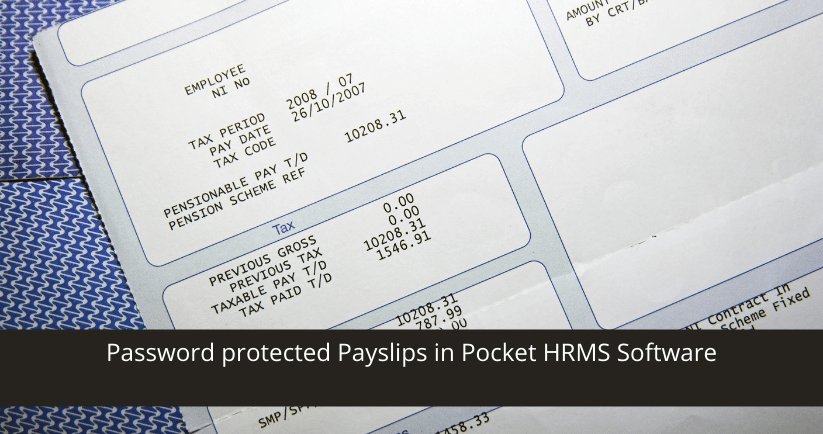
A payslip contains confidential employee information, including salary details, earnings, tax deductions, and bank-related data. Protecting it is an important responsibility in payroll management. With payslips commonly shared through emails, employee self-service portals (ESS), and digital payroll management software. So, maintaining security is mandatory here. To strengthen payroll security, many organisations implement password protection and additional verification during payslip downloads to safeguard sensitive employee information and maintain confidentiality.
In this blog, we will discuss the importance of password-protected payslips, the role of secure payroll document access, and the steps organisations can follow to protect payslips with a password.
Payslips contain confidential employee information, including salary details, tax deductions, bank information, and payroll records. Protecting this data is an important part of payroll management. Password protection in the payslip view ensures secure access. It maintains privacy and preserves employee information during digital sharing and storage. Let’s have a quick discussion on why password protection is essential in their payslip view.
Here are 4 easy steps on how to apply a password to protect the payslip.
Step 1: Log into the Pocket HRMS cloud portal, go to the ‘Settings’ menu and under the ‘Payroll’ tab, click on the ‘Payslip’ subtab.
Step 2: Click on the ‘Edit’ radio button, select settings from the ‘Configuration Number’ dropdown and click on the ‘Others’ tab.
Step 3: Scroll down to the ‘Password Setting’ and select a combination option to set a strong password. Select the checkboxes for the sources from the ‘Password Applies On’ option. (Note: The password will be set on the payslip if downloaded from the selected sources.)
Step 4: After you have selected the required settings, scroll up and click on the ‘Save’ button. The password for the payslip will be set accordingly.
Path: Cloud portal>Settings>Payroll>Payslip>edit>Configuration Number>Others>Password Settings>Password Applies On>Save
Password-protecting payslips is a straightforward and effective way to maintain payroll security. It keeps sensitive employee information confidential and ensures that salary data reaches only the right hands. With Pocket HRMS, setting up payslip password protection takes just a few clicks through a simple configuration path. HR teams can define password combinations, select applicable sources, and save the settings without any technical complexity. Secure payroll document management builds employee trust and supports responsible data handling across the organisation. Implementing payslip password protection reflects a commitment to data privacy and strengthens the overall integrity of your payroll process.
A payslip password is a security layer applied to a payslip PDF that restricts access to only the intended employee. It is used to protect sensitive information, such as salary details, tax deductions, bank data, and personal identifiers, from unauthorised access. When payslips are distributed through email or employee portals, a password confirms that even if the document reaches the wrong inbox, the data inside remains protected.
Yes. In most HRMS platforms, including Pocket HRMS, the password configuration is flexible and can be updated by the HR or payroll administrator as needed. You can go back to the Password Settings section and select a different combination from the available options. The updated format will apply to future payslip downloads based on the sources selected in the configuration.
In Pocket HRMS, the ‘Password Applies On’ option lets you select the specific sources from which the password protection will be active. This means you can choose to apply the password when downloading payslips from the employee self-service portal, when distributing emails, or through other configured channels. If a source is not selected, the payslip downloaded from that source will not require a password to open.
If an employee is unable to open their payslip, they should first refer to the email or communication sent with it, as it often contains instructions on the password format. If the format is not mentioned, they should contact their HR or payroll team directly to get the correct password or have it reset. Employees should never attempt to use third-party tools to bypass pay slip protection, as this can raise security and compliance concerns.
Q6. Is password protection alone enough to secure payslips?
Password protection is a strong first step, but a complete payroll security approach typically combines multiple layers. It includes role-based access controls that limit who can view payroll data, multi-factor authentication on the HRMS portal, encrypted transmission when sending payslips over email, and regular audits of user permissions. Employees should also be trained not to share their pay slip passwords or forward protected files to unverified recipients. Together, they create a more reliable safeguard for sensitive payroll documents.