

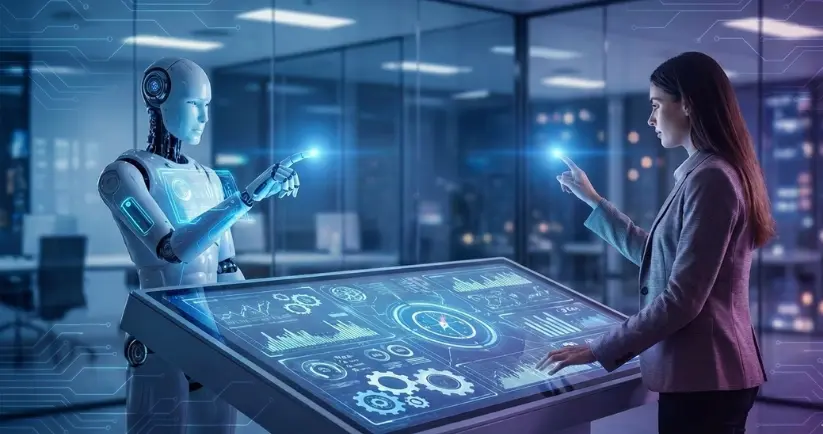
In this rapidly evolving era, the rise of AI and the widespread adoption of automation are transforming industries by redefining the goals to achieve higher productivity and future-ready growth. Gradually, a situation is unfolding across organizations where HR professionals are feeling concerned about the growing impact of AI and automation on their careers. Several studies and theories have surfaced that how companies are witnessing increased HR turnover amid the expanding presence of automation and AI-driven systems.
Taking this into account, a recent finding from McKinsey & Company (2023) suggests that nearly 30% of HR-related tasks could be automated by 2030, indicating a significant shift in how HR functions are performed. Additionally, a survey by the Hero Group revealed that close to 80% of professionals in India including those in HR anticipate the possibility of AI replacing certain job roles in the near future (Verma, 2023). These developments have sparked an ongoing debate around the efficiency of AI adoption and its broader social and economic implications on employment.
Hence, the HR experts are dicey thinking whether the use of AI glorifies their employment opportunities for them or the rapid rate of technological advancement might hamper their career in future. This blog tells about the strategic HR potentiality in the rise of automation. In blog you must get a fair understanding how HR’s strategic presence or their empathetic outcomes helps the company enhance employee engagement despite presence of automation and other technological advancement.
Let’s commence.
Here are the top 5 strategic HR roles in the rise of AI and automation.
As AI continues to evolve rapidly, organizations need new skills and capabilities to keep pace. HR plays a key role in identifying the required skills, planning the right strategies utilising AI, addressing skill gaps, and ultimately achieving a satisfactory outcome.
At the same time, in this era of automation, HR is responsible for strengthening its own technical expertise and clearly communicating expectations to employees, ensuring they receive relevant, tailored training that aligns with company objectives.
Automation has brought unprecedented transformation across HR processes. On the one hand, it has streamlined HR practices by providing future-ready advancement through the HR management software; on the other hand, it has created uncertainty among HR professionals about its potential impact on their careers.
Even in an era dominated by automation, HR can drive workplace innovation by placing people, emotion, and thought process at the centre of every change. While technology streamlines processes, HR’s human presence fuels creativity through empathy, collaboration, and trust. Initiating open dialogue, nurturing diverse ideas, recognizing individual contributions, and creating secure spaces for a multigenerational workforce, HRs create a culture that encourages employees to think beyond routine tasks. Afterall, human judgment, emotional intelligence, and ethical decision-making help translate automated efficiency into meaningful innovation.
Ethical considerations related to artificial intelligence are gaining increasing attention across organizations. Presence of AI workforce handling creates issues related to data privacy, algorithmic bias, etc. Additionally, the impact of automation on employee performance evaluation, candidate-hiring, and appraisals create a mess in strategic decision making. Human Resource functions play an important role in ensuring the ethical implementation of AI, by establishing clear policies, governance frameworks, and usage guidelines. Overall, by bringing a human-cantered perspective, HR ensures that ethical standards are upheld and employee concerns are addressed.
After all, while informed, value-driven decision-making using AI is essential, establishing the right processes and clearly defined terms and conditions for its use is equally essential to ensure responsible, sustainable technological advancement.
Artificial intelligence has the potential to improve employee engagement through automation by offering tailored assistance, but it can’t replicate human connection, empathy, or consistent interpersonal interaction. Through regular face-to-face conversations, open-door policies, active listening sessions, or personalized feedback, HR can better understand employees’ emotions and challenges while strategically leveraging AI and technology to design and implement well-aligned, efficient solutions.
Moreover, HR’s role in transitioning from legacy workflows to strategic systems underscores the importance of effective change management within their companies.
The rapid deployment of AI in workforce management requires significant changes to an organization’s structure and processes. The presence of strategic HRs is essential for understanding the changes and ensuring seamless transitions. Although the automation is quick and accurate in every scenario, HRs’ empathy ensures that change management is empathetic and inclusive, helping employees adapt to new changes effectively.
Also Read: What is Strategic Human Resource Management HRM?
Conclusion
The rise of AI and automation does not diminish the relevance of HR; instead, it redefines it. By balancing technological efficiency with empathy, ethical judgment, and strategic insight, HR can safeguard employee engagement, guide meaningful change, and drive sustainable growth. Ultimately, human-centric HR practices ensure that automation only enhances, not replaces the value of people in organizations.