
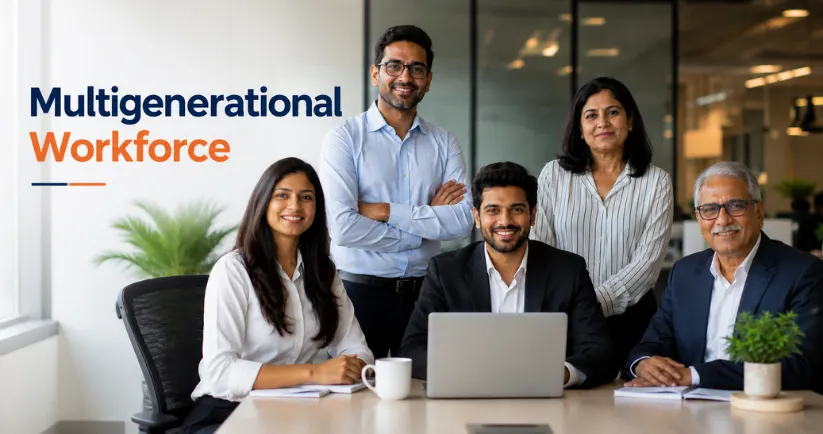
The multigenerational workforce has become an important workplace trend in today’s business environment. Organizations increasingly rely on employees from different generations, including Baby Boomers, Gen X, and Gen Z, to bridge skill gaps, adapt to changing business needs, and balance experience with innovation. While senior employees contribute industry knowledge and practical expertise, younger generations bring fresh ideas, digital capabilities, and modern approaches to problem-solving. Together, they support stronger collaboration, improved productivity, and long-term business growth.
In short, it is a work environment where employees from multiple distinct age groups collaborate within the same organization and deliver strong productivity.
However, managing a multigenerational workforce can also be challenging. Organizations often need to handle differences in mindset, communication styles, and work preferences across generations.

A multigenerational workforce brings together employees from different age groups, experiences, and skill sets. When managed properly, it can support business growth and improve workplace performance. Here are some key reasons a company should encourage the creation of a multigenerational workforce for better outcomes.
A multigenerational workforce can improve productivity by bringing together people with different skills, experiences, and knowledge.
Employees learn from each other through knowledge sharing and collaboration. This helps improve skills and allows teams to work more efficiently toward common business goals.
One of the biggest advantages of a multigenerational workforce is the combination of fresh ideas and practical experience.
Younger employees often bring creativity and new approaches; on the other hand, experienced employees contribute industry knowledge and problem-solving skills. All together, they help businesses handle challenges and support long-term growth.
Employees from different generations often have different viewpoints and ways of thinking. These diverse perspectives help businesses gather valuable feedback, identify gaps, and make better decisions. It also improves planning and supports stronger business strategies.
A workforce made up of different generations connects better with customers from varied age groups and backgrounds.
Employees can understand different customer preferences and communication styles, helping businesses build trust and stronger customer relationships.
When managed well, a multigenerational workforce can improve teamwork and collaboration. Employees learn to respect different viewpoints and communication styles. The multigenerational appearance encourages knowledge sharing, improves employee skills, and helps create a more supportive and motivated workplace.
Managing a multigenerational workforce is challenging, but the right employee engagement strategies turn age diversity into a competitive advantage. Organizations with employees from different generations benefit from varied experiences, innovative ideas, and stronger collaboration. Here are some effective ways to engage a multigenerational workforce while improving teamwork, productivity, and workplace harmony.
Every generation has a different communication preference. While older employees may prefer face-to-face discussions or emails, younger employees often lean toward instant messaging and digital collaboration tools. Organizations should encourage a balanced communication culture that supports both traditional and modern communication methods.
Promoting open, transparent, and respectful communication helps employees learn from one another. Senior employees can share professional wisdom and workplace experience, while younger employees can introduce modern communication trends, digital tools, and fresh perspectives. The exchange strengthens collaboration and creates a more inclusive work environment.
Continuous learning is one of the best ways to engage employees across generations. Companies should invest in training and development programs that help employees learn new technologies, improve existing skills, and adapt to changing workplace demands.
Upskilling and reskilling programs encourage knowledge sharing between experienced employees and younger talent. Senior employees can provide practical industry insights, while younger employees can help teams adapt to modern technologies and digital workflows. A strong learning culture keeps employees motivated, adaptable, and future-ready.
Different generations are motivated by different workplace benefits and opportunities. Personalizing engagement strategies significantly improves employee satisfaction and retention.
By understanding generational preferences, organizations create targeted employee engagement initiatives that improve morale and productivity.
Encouraging collaboration between different generations helps bridge workplace gaps and builds stronger teams. Businesses create mentorship and reverse mentorship programs where experienced employees share industry expertise. In contrast, younger employees provide digital and modern workplace insights. Cross-functional projects, team-building activities of different ages like office outings and collaborative workshops further strengthen relationships among employees.
Cross-functional projects, team-building activities, office outings, and collaborative workshops further strengthen relationships among employees. Focusing on shared workplace values such as respect, innovation, and growth helps create a positive and inclusive company culture.
Recognition plays a major role in employee engagement. Organizations should reward employees based on performance, achievements, and contributions rather than age or generational differences.
Providing fair incentives, appraisals, bonuses, and equal growth opportunities helps employees feel valued and motivated. Celebrating both small and major achievements creates a culture of appreciation that boosts morale, employee satisfaction, and long-term retention.
Challenges in multigenerational workforce can arise die to varied factors which includes the following:
As workplaces adopt AI, automation, and digital tools, some employees may find it difficult to adapt. Senior employees may need additional training, while younger employees often prefer technology-driven solutions. It creates a gap in digital adoption.
Different generations often carry assumptions about each other. Some value traditional work methods, while others prefer innovation. These perceptions can create resistance to change and affect teamwork.
Balancing fresh ideas with industry experience can be challenging. Senior employees value practical knowledge, while younger employees bring new perspectives. Failing to appreciate both strengths can lead to conflicts.
Different communication styles create misunderstandings. Some employees prefer face-to-face conversations, while others rely on digital communication. Respecting these preferences is essential for effective collaboration.
Leadership decisions can become challenging in multigenerational workplaces. Younger managers leading senior employees, or senior managers supervising younger teams, may face differences in expectations and working styles.
However, an HRMS portal is mandatory for every small and big business. This HRMS helps management streamline those challenges and build a multigenerational workforce by creating a more inclusive and flexible employee experience.
The software offers personalized learning programs, employee self-service portals, easy mobile access, and multiple communication channels that suit employees across different age groups.
HRMS also supports mentorship programs, multigeneration-based performance management, employee engagement surveys, and recognition initiatives to encourage collaboration between generations.
By reducing administrative tasks and promoting continuous learning and fair growth opportunities, an HRMS helps bridge generational differences and create a more connected, productive, and collaborative workplace.
Conclusion
A multigenerational workforce offers a significant advantage to any organisation when managed with effective communication and mutual respect. Employees from different generations bring unique skills, experiences, and ideas that help businesses grow and adapt to changing workplace needs.
Encouraging two-way learning is important in such workplaces. Senior employees learn digital tools and modern work methods, while younger employees benefit from the experience and practical knowledge of older colleagues.
When organizations create a culture of collaboration and learning, they can improve productivity, strengthen teamwork, and build stronger trust with customers and stakeholders. The right balance of experience and innovation helps create a more efficient and successful workplace.
A multigenerational workforce helps organizations combine experience, innovation, digital skills, and leadership qualities. It improves collaboration, creativity, decision-making, and overall business performance.
The major generations in today’s workplace include,
Companies can manage a multigenerational workforce by
A multigenerational workforce promotes inclusivity, mutual learning, and collaboration. Employees learn from each other’s experiences and skills, creating a more supportive and productive work environment.
Effective communication strategies include,
Technology helps employees from different generations collaborate more efficiently. While younger employees may adapt quickly to digital tools, experienced workers contribute industry knowledge and strategic insights.
HR teams play a key role by developing inclusive policies, improving employee engagement, resolving generational conflicts, and creating learning opportunities for employees of all age groups.
Leaders can support multigenerational teams by encouraging collaboration, recognizing employee strengths, offering career growth opportunities, and building an inclusive workplace culture.
The example of multigenerational workforce strategies includes,
A positive multigenerational work environment increases employee engagement by making employees feel valued, respected, and included regardless of their age or experience level.
A Multigenerational Workforce includes important skills include communication, adaptability, emotional intelligence, collaboration, leadership, and digital literacy.
Businesses can reduce conflicts by promoting diversity training, encouraging empathy, setting clear expectations, and creating opportunities for team collaboration and mentorship.