




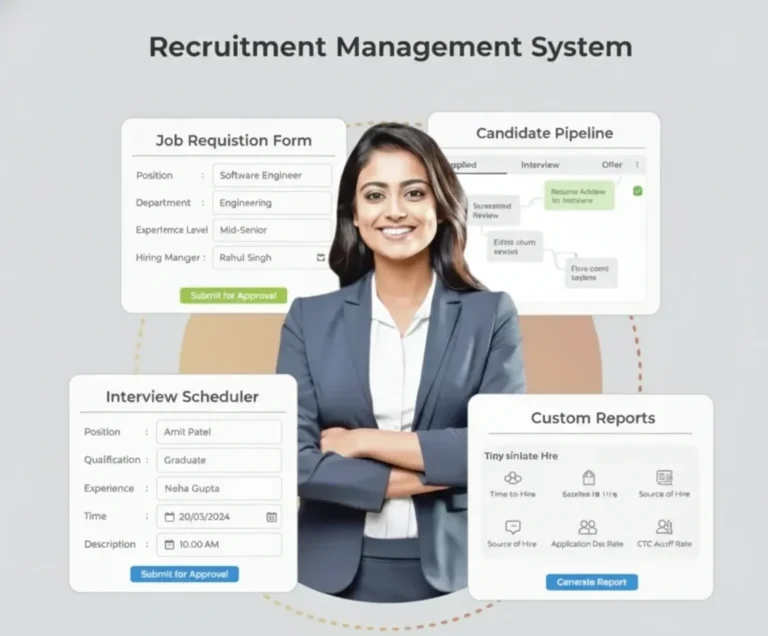
A recruitment management system operates through typical workflows, from planning to recruiting the right talent to completing the onboarding process. Additionally, it integrates with HRMS software to manage HR payroll. Let’s discuss how the recruitment management system works during the candidate hiring process.
The recruitment software helps recruiters write the vacancy post in the right format and then assists them in posting it on relevant pages, platforms, or social media channels. Consequently, Employers attract sufficient talent for those particular positions.
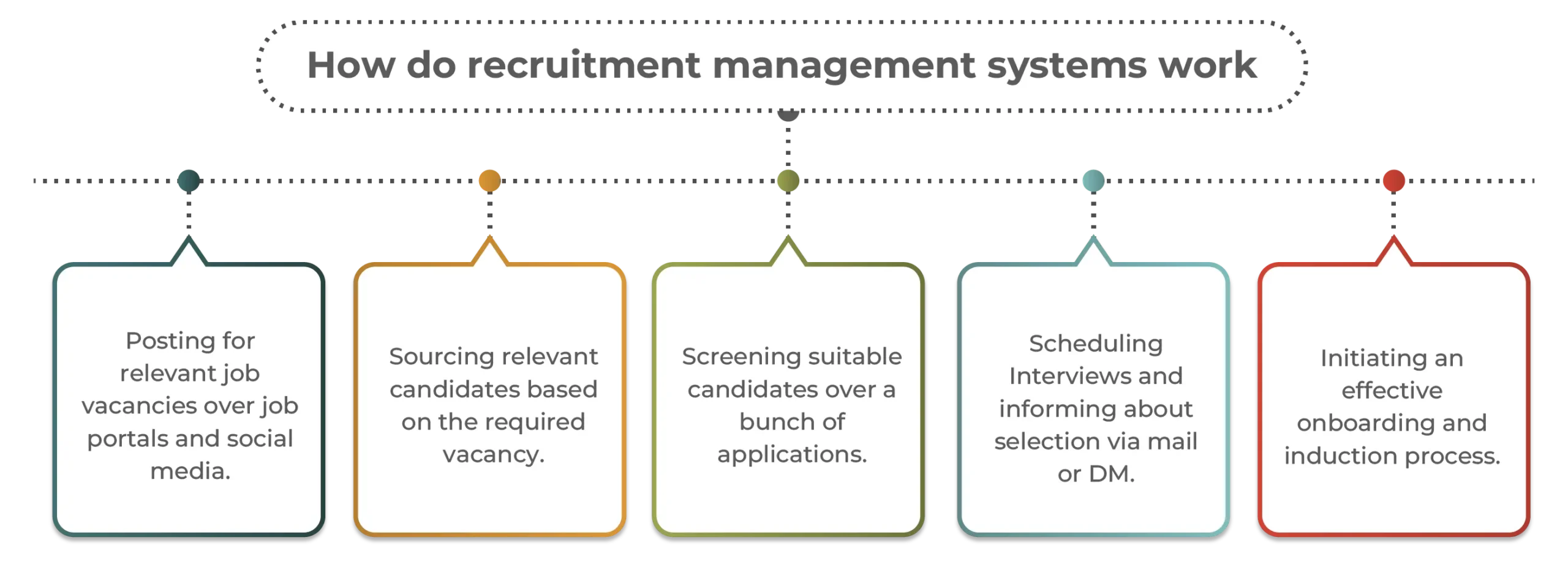
With the assistance of the recruitment management system, employers can efficiently identify potential candidates through various methods of recruitment, which involves different channels, including numerous job search platforms and social networks. Additionally, existing employees can refer someone to a specific relevant platform through the RMS portal.
After posting a job, employers receive a pile of resumes from various job portals. The right online recruitment management system automatically analyses and parses the resumes to extract relevant information before scheduling the interview process and initiating the candidate selection.
The system automates the interview scheduling process by coordinating with the shortlisted candidates via email or DM and scheduling the interview date and time on the candidate’s calendar to keep them engaged. As a result, the candidate’s interview time does not overlap between the two companies, and the employer properly maintains each candidate’s interview schedule data.
In many companies, RMS automates assessments and tests according to the required post-vacancy. Additionally, the added data analytics features provide detailed information on recruitment metrics, assisting employers in informed decision-making. Different recruitment management tools even automate the selection process, including sending mail or offer letters to candidates and providing feedback.
The online recruitment management system also offers applicant tracking features, through which recruiters can track candidates’ performance and salary expectations throughout the hiring process. So, after selecting the candidates, employers gain valuable insight into how to draft effective negotiation strategies.
The transition from candidates to employees occurs during the onboarding process. Recruitment management software also automates this process by sending welcome emails, distributing employee handbooks and annexes, and completing paperwork on behalf of HR professionals. It often tracks the progress of the onboarding tasks.
Additionally, with employee self-service assistance, employers gain valuable insight into the onboarding process, and the RMS smooths the hiring process by following up with new hires on time.

Now that you have a good idea of how recruitment systems work, here are the top 7 features of robust recruitment management systems:
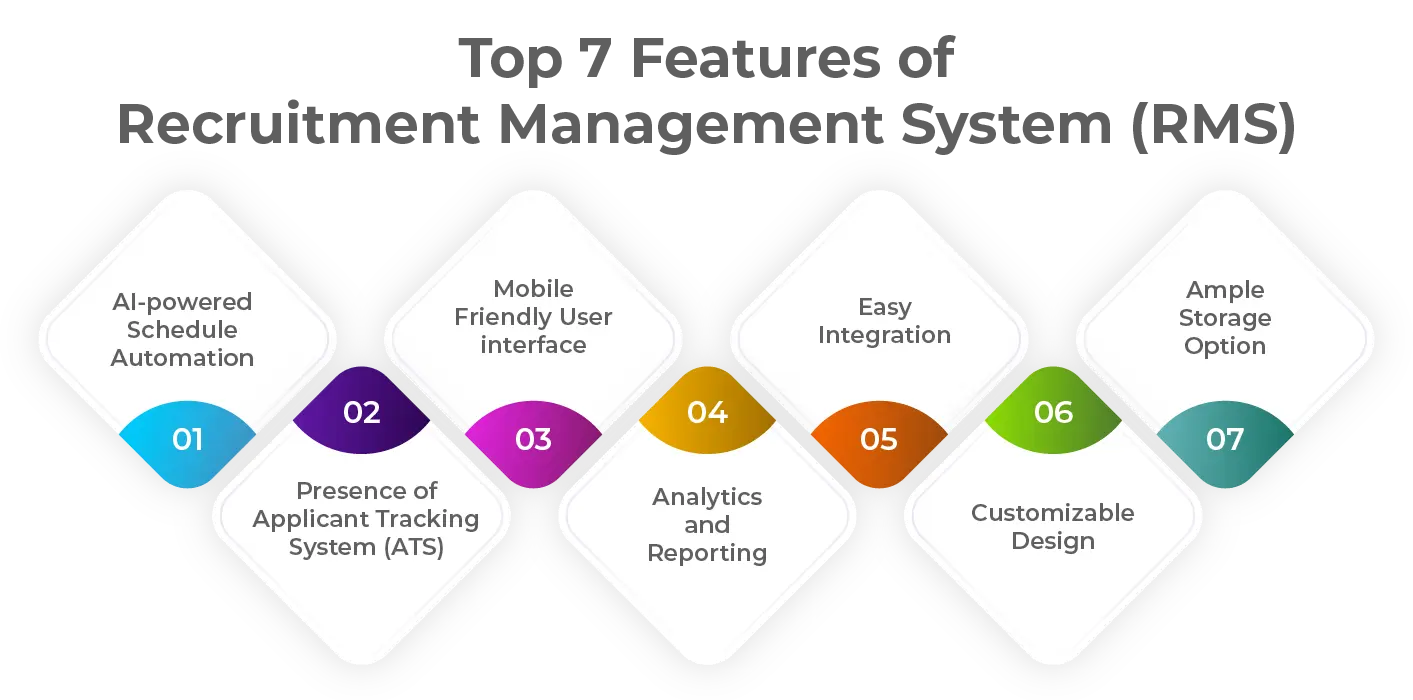
Employers can face logistical challenges when screening candidates and scheduling interviews. An AI-powered recruitment process automates the time-consuming, repetitive work and provides a streamlined solution for resume screening, candidate sourcing and outreach, interview scheduling, etc.
Besides, the automation process is integrated with calendar applications like Google Calendar or Microsoft Outlook and seamlessly added to the candidates’ calendars as a reminder.
Furthermore, the AI-powered recruitment management system empowers candidates by allowing them to select interview slots that align with their availability. It eliminates the need for excessive back-and-forth communication and scheduling conflicts.
One of the essential features of a recruitment management system is an applicant tracking system and associate tracking tools. An application tracking system helps employers by automating resume shortlisting and evaluating the right candidate’s profile.
Moreover, after selecting talents, employers can initiate the onboarding process on time, as the ATS assists them in completing the task leading to onboarding.
The recruitment management system must be accessible through the candidates’ mobile app. Nowadays, no one takes the time to search for jobs by sitting beside a laptop at the end of the day. They randomly open job sites and search for suitable employment using any relevant mobile application.
Therefore, the modern recruitment management system should feature mobile-accessible elements, including a smooth user interface and intuitive touch controls, allowing job seekers to easily navigate and complete the application process by uploading essential documents from their cloud storage using their smartphones or tablets.
Before integrating any recruitment management system, it is essential to recheck whether it has features offering robust analytics and reporting functionalities. Understanding candidates’ essential data, analyzing it, and generating timely reports is a big task. Employers make mistakes or numerous mismanagement, and data swiping occurs while recruiting candidates.
These features help human resource professionals track key candidate performance metrics, such as candidates’ off rate, time to file, source of hire, cost-per-hire, etc. It provides valuable insight into the candidates’ data and allows them to make data-driven decisions and optimize strategies smoothly.
Before committing to a subscription, it is vital to review the recruitment management software and ensure it offers easy integration. A recruitment management system and associated ATS tools foster cross-functional team engagement in the selection process. These tools are pivotal in facilitating the process by easily sharing candidate profiles with management. They also allow external stakeholders and experts to participate in the candidate hiring process.
The collaborative approach streamlines the process when HR hires top talents or managerial experts and creates transparency within the organization’s hiring practices.
The recruitment management system ensures customizable branding, including modifying application forms, dashboards, and candidate portals to enhance usability and ensure a cohesive brand experience. It helps improve the candidate’s knowledge and maintain your brand identity throughout the interview process.
Moreover, this feature assists the HRs in adjusting the system’s settings to align with the unique recruitment strategies, improving efficiency and candidate engagement.
Employers may face challenges handling, managing, and storing vast amounts of applicant data during hiring. Though they successfully handle the selected candidate’s data, it becomes a nightmare for them to hold the candidate’s information, which can be effective for future recruitment.
Recruitment management software saves recruiters time by providing ample storage options. Hence, they can securely store the rejected candidates’ documents and other important information in cloud storage.

During hiring, a recruitment management system streamlines the entire process and automates the HRs’ repetitive work so they can focus on other administrative work during candidate recruitment. The HR software for recruitment has its own set of appealing features; some of the advantages are as follows:
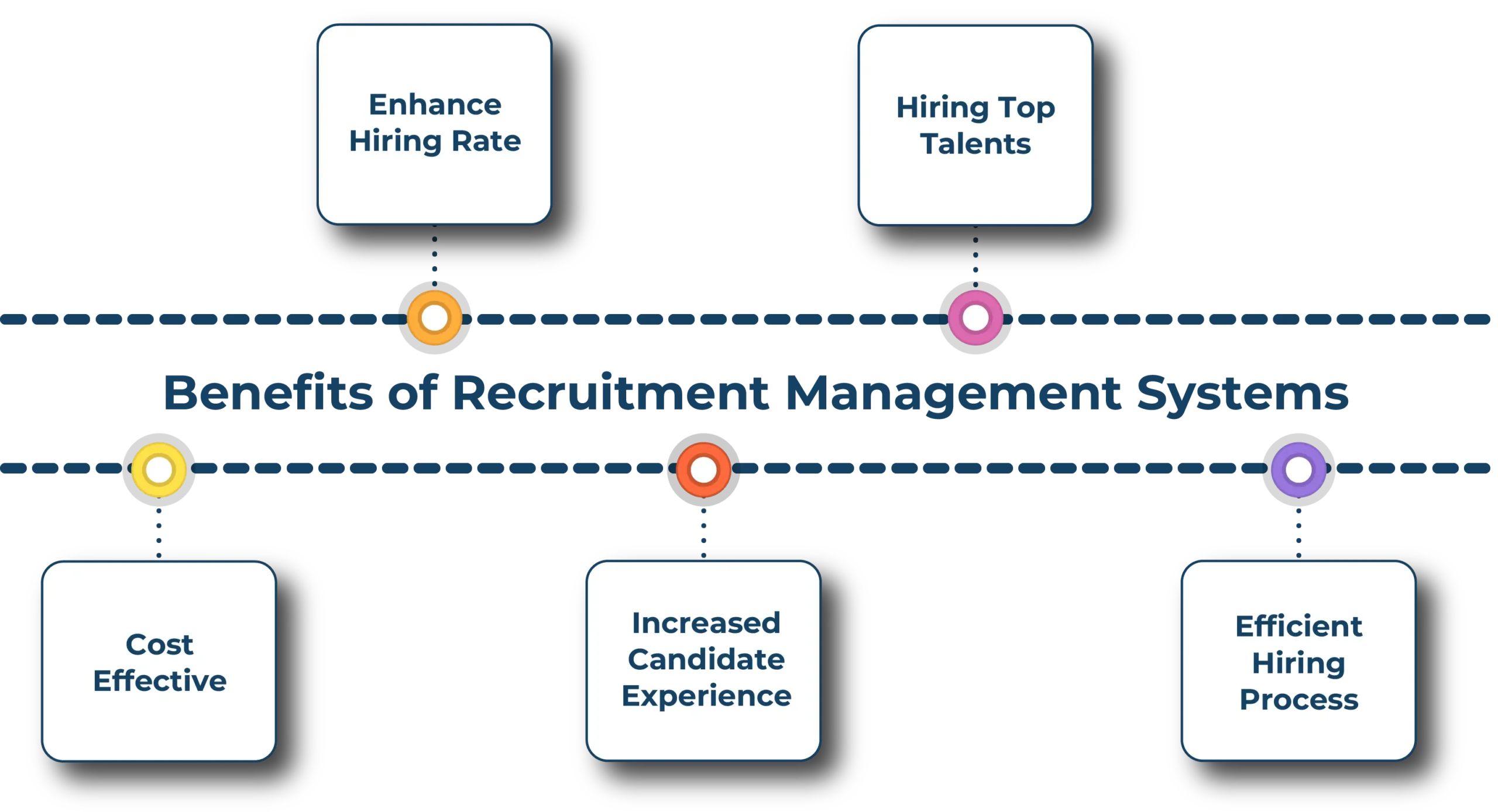
The entire recruitment process is time-consuming and costly. From the initial step, like planning for hiring, to onboarding the right talent for the relevant position, it costs a significant amount for each hiring. A right recruitment management system with all features automates HR tasks like candidate screening, sourcing, interview scheduling, and onboarding. So, organizations do not have to spend extra money on each task; they can simply subscribe to a recruitment system and automate the entire process.
Hiring top talent manually is time-consuming and troublesome, as employers can reach out within certain limitations. Moreover, they face challenges due to a lack of a diverse search field within a specific timeline. As a result, they often end up choosing average candidates for critical positions.
The recruitment management system (RMS) helps HRs with diverse search opportunities, attracting up to four times more genuine candidates and maintaining a data-driven approach throughout every hiring phase.
Employers’ main objective during recruitment is to find the right candidate among many applicants. Similarly, when a candidate changes jobs, they apply to multiple companies. In this case, innovative branding and a smooth application process help ensure the candidate remembers the employer’s brand. According to CareerPlug’s 2025 Candidate Experience Report, 66% of candidates accepted an offer because of a better candidate experience.
A hiring management system enhances employer branding and provides a relaxed and automated user experience for candidates during job applications. The system enables candidates to complete applications in just a few minutes, compared to hours spent on other platforms — ensuring a positive experience and attracting high-quality applicants into the talent pipeline.
A recruitment management system ensures high-end features like automated job posting, resume parsing, and AI-driven candidate matching. This approach assists employers in identifying qualified and relevant candidates for vacant positions.
The system integrates with multiple job portals and social media platforms to expand the reach and visibility of job postings. With outstanding branding, the system helps attract more applicants, creating a broader and more diverse candidate pool.
A recruitment management system streamlines hiring by creating an efficient and transparent process that improves the quality of hires. The system offers features and functionalities that automate key tasks such as candidate sourcing, screening, interview scheduling, and selecting suitable candidates during hiring.
Additionally, recruitment HR software enhances organizational brand awareness, encourages candidates to join the company, and even assists employers by automating the reference-checking process during recruitment.