Simplify administration while delivering a seamless employee lifecycle, from smooth onboarding to effortless offboarding, all with your Employee Management software.


Employee management software is a digital platform that helps organizations manage employee lifecycle, associated HR processes and the data related to it, from a centralized interface.
It can support recruitment, onboarding, attendance, leave, performance, payroll, employee self-service, and offboarding, helping HR teams accomplish their tasks quickly.
A user-friendly HRMS Software for managing candidate details effectively and streamlining hiring and onboarding operations. With our advanced recruitment management system that includes tools like candidate timeline and digital onboarding, we provide your candidates with a completely paperless and enhanced experience.
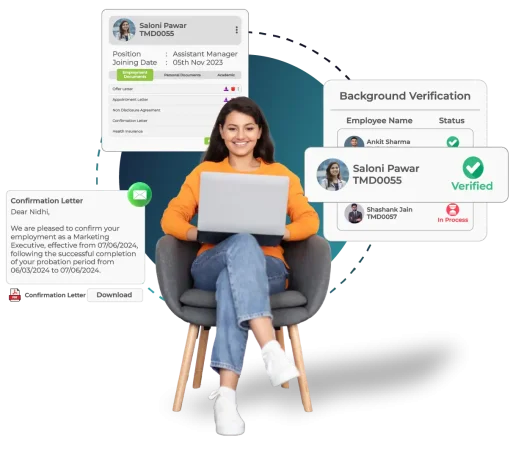
Quickly verify applicant details like qualifications, prior experience and employment history.
Increased efficiency in measuring candidate performance and confirming them.
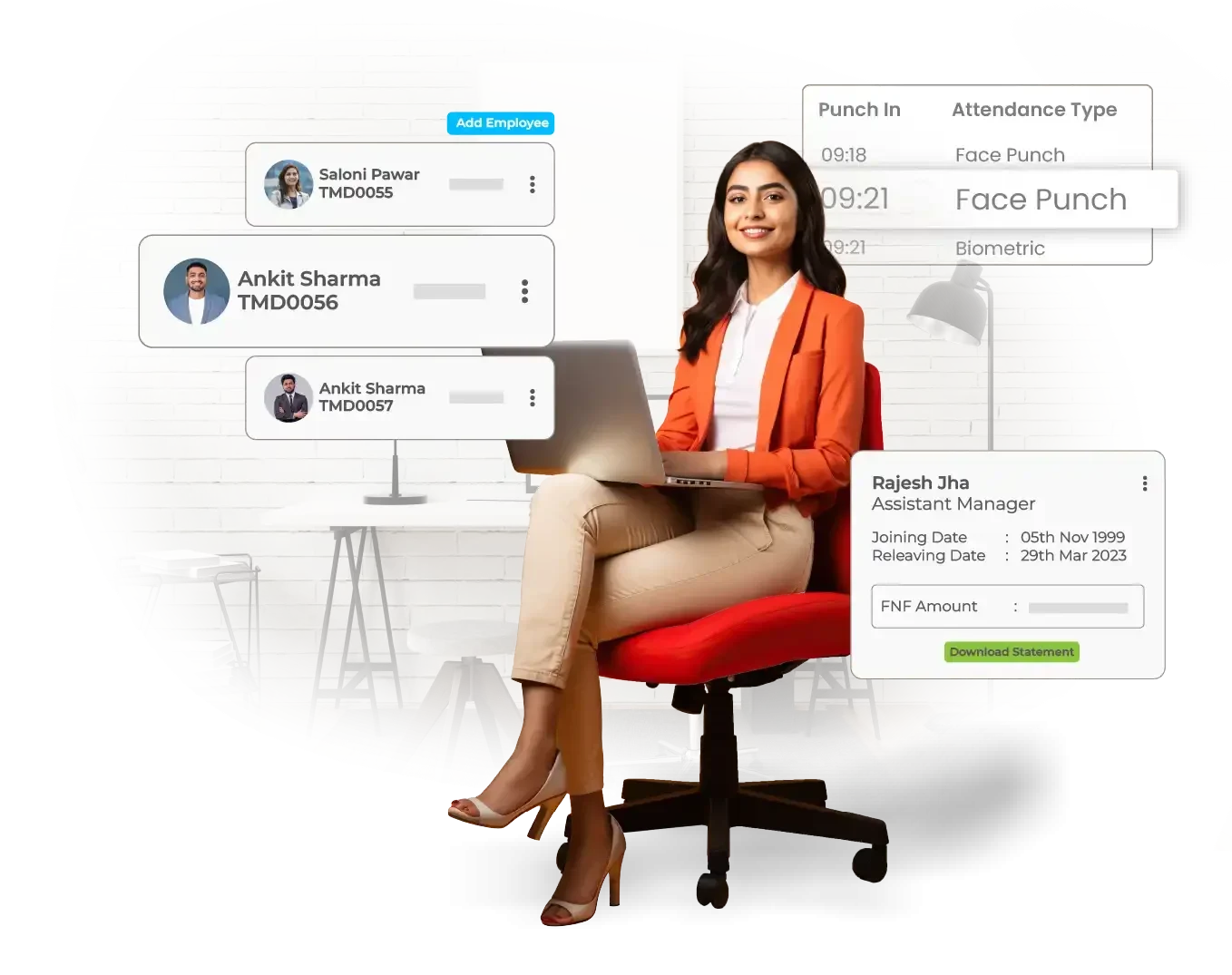
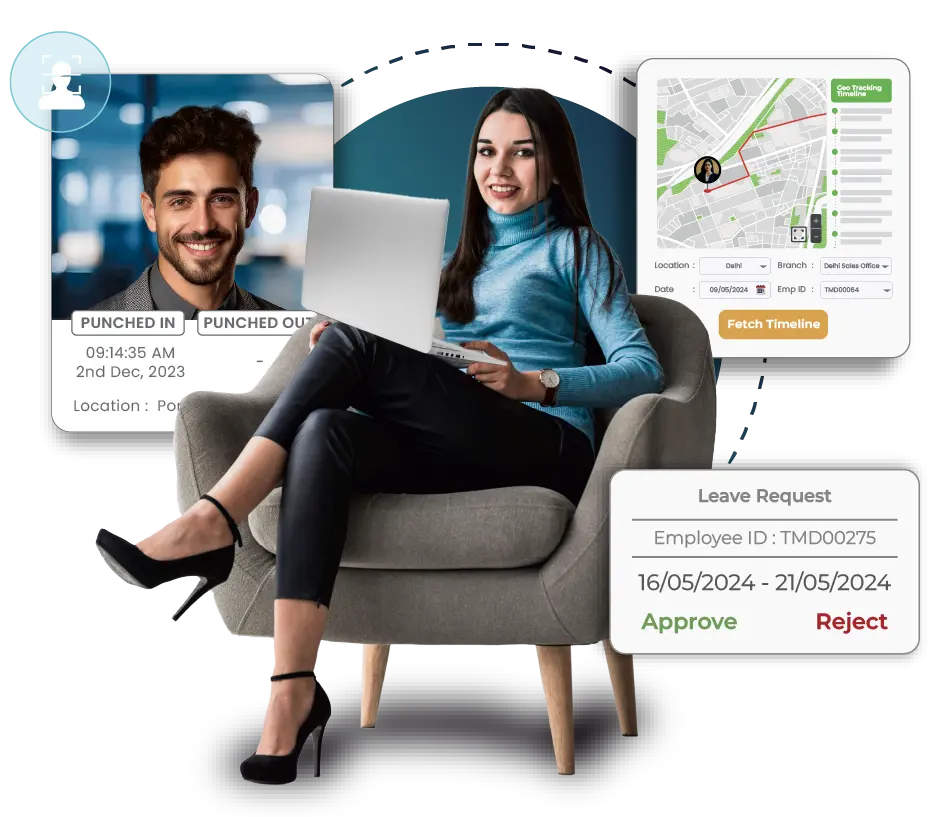
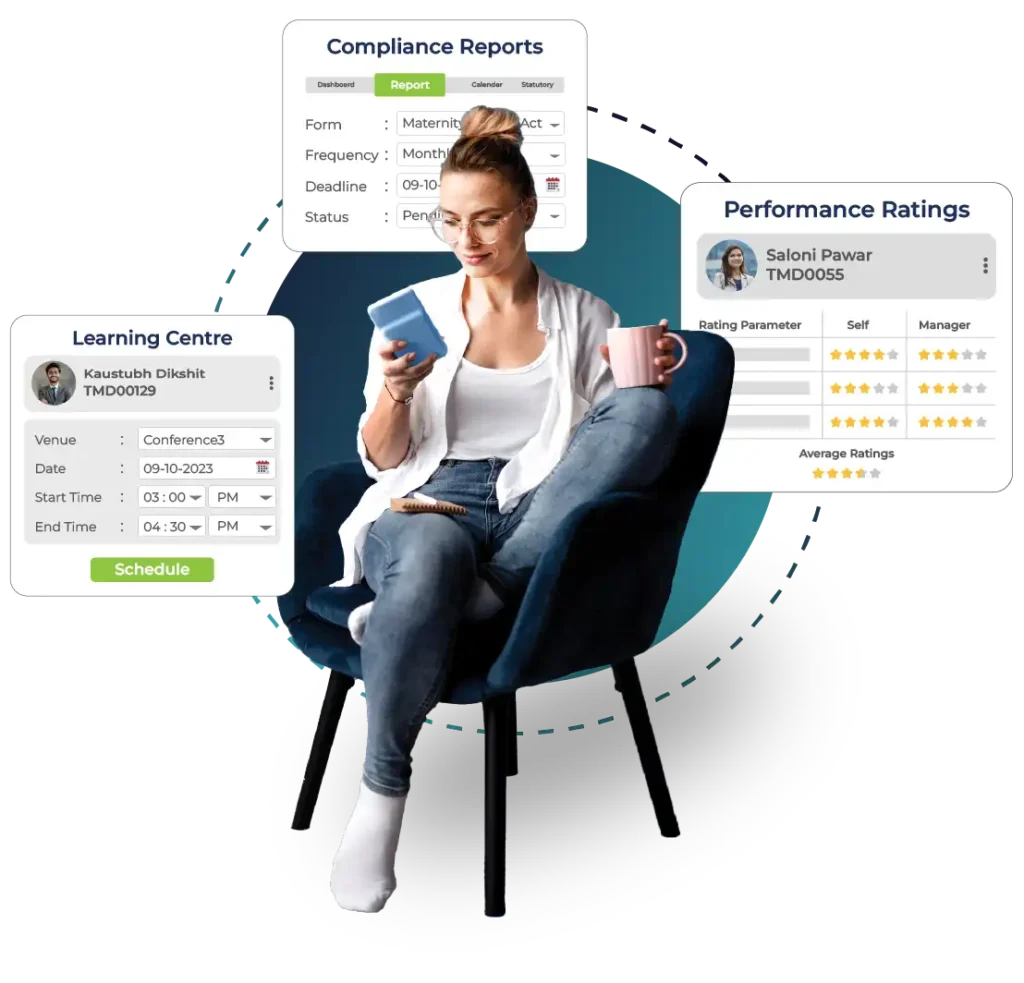
Empower your staff to easily mark their attendance using their smartphone cameras and GPS. Foolproof your attendance records with user access controls. Streamline leave management with online applications and approvals.
Generate various kinds of attendance reports like annual muster roll, employee leave data, etc. with a few clicks, thanks to template creation option using your custom settings.
User-friendly ESS Portal for managing and streamlining employee’s HR-related operations. Simplified user interface and dedicated mobile app to ensure easy access to employment data, leave applications, pay slips downloads, and more.
Easy access to performance metrics and self-evaluation for a thorough appraisal process.
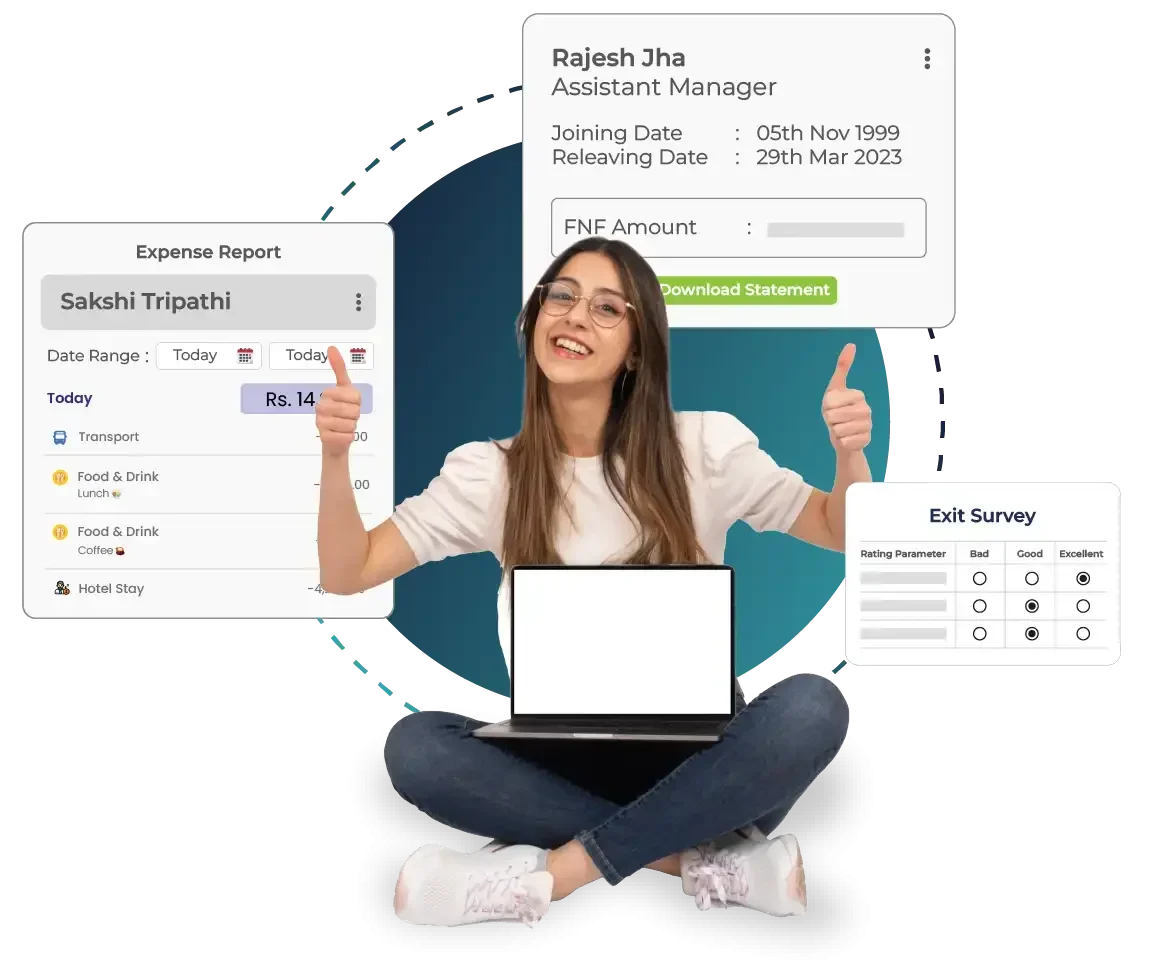
Comprehensive expense management systemwith invoice attachments and multi-level approvals for enhanced transparency.
Automate seamless employee offboarding system, ensuring a smooth and efficient transition and exit procedures.
Transparency in final pay, including salary, bonuses, and other entitlements through Full and final settlement, ensuring compliance with legal and organizational policies.
The first type in the employee management software is attendance and time tracking software. Using features and functionalities such as biometrics, facial recognition, and time sheets, employees can manage their work hours, shifts, leaves, and overtime accurately and efficiently.

The second and most essential type of performance management system. The tool features include KPIs, OKRs, and 360-degree feedback, enabling the accurate tracking of employee goals, productivity, and achievements.
The software helps companies assign shifts, arrange rosters, and manage duty rotations using the workforce scheduling tool. It helps employees understand their work responsibilities transparently, thereby improving productivity.
Employee management software and associated tools come with updates to labour laws and related acts & compliance. Hence, the employers and employees can stay up-to-date with the latest law updates.
The employee management software provides employees with a cutting-edge self-service assistance through the use of the ESS portal. It allows employees to submit their documents, access payslips, apply for leave, track their performance, and update their personal details.
Choosing the ideal employee management software requires a structured approach, as the right system for you will be based on your company’s size, budget, and operational bottlenecks. Here are the main factors to keep in mind:
Before approaching different vendors, create two categories of your requirements as ‘must-haves’ and ‘nice-to-haves’. List down the features that you require, under each category.
Based on the requirements list, ensure whether you require an all-in-one platform, or whether integrations for specific modules within your existing system will be enough to fulfil your needs.
Check the user experience for accessibility and intuitiveness, as any software is only as good as its user experience. Mobile access is equally important in the modern connected world.
Decide whether you need the employee management software as a ‘SaaS’ or whether you require an ‘on-premises’ system. Cloud-based systems usually have multiple advantages over ‘on-premises’ systems.
Pocket HRMS is a leading HRMS software solution provider, recognized by top-notch review platforms like ‘G2‘ and ‘Software Suggest‘ for its revolutionary features.


Employee management software centralizes employee data and automates routine HR processes such as attendance tracking, leave management, onboarding, performance management, payroll, documentation, and employee offboarding.
Employee management software helps HR teams reduce manual administrative work by automating repetitive processes and centralizing employee data. It improves HR efficiency by simplifying tasks such as attendance, leave, employee records, performance tracking, and payroll.
Yes. Employee management software can support the employee lifecycle from recruitment and onboarding to attendance, leave, performance management, payroll, employee self-service, and offboarding. This gives HR teams a centralized system for managing employees throughout their employment.
Yes. Employee management software is suitable for SMEs businesses because it can automate routine HR processes, centralize employee information, and scale as the organization grows. The right solution depends on the company’s workforce size, HR requirements, and required integrations.
Employee management software primarily focuses on managing employee information and workforce-related processes, while an HRMS generally covers a broader range of HR functions. An HRMS may combine employee management with payroll, recruitment, attendance, performance management, compliance, and other HR modules.
Employee management software improves employee self-service by allowing employees to access HR information and complete routine HR tasks without relying on HR for every request. Depending on the system, employees can view their information, apply for leave, access payslips, manage attendance requests, and perform other HR-related activities through an employee self-service portal.